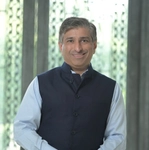
Ratul Puri on Renewable Energy and Storage: Building India’s Flexible Power System

India’s renewable energy growth is changing the way its power system needs to operate. Adding solar capacity remains important, but the larger challenge is making sure that clean electricity can be stored, moved and delivered when demand requires it. Ratul Puri, Chairman of Hindustan Power, views this as an important part of India’s energy transition. As renewable generation increases, the focus needs to move beyond capacity addition towards building a power system that can respond to changing patterns of generation and consumption.
Renewable Energy Creates a Timing Challenge
Solar power is strongest during daylight hours, while electricity demand can remain high into the evening. As the share of these variable renewable sources increases, managing this difference between generation and demand becomes increasingly important. The International Energy Agency (IEA) has highlighted the scale of this challenge in India. Its analysis notes that solar generation is becoming an increasingly important part of India’s electricity mix. In the renewable-rich states, solar PV was already creating significant changes in daily power demand patterns by reducing net demand during the day and increasing the need in the evening. This changing solar profile makes storage, demand-side flexibility and stronger grids increasingly important.
Several sources of flexibility can help manage this changing system, including energy storage, demand-side flexibility and stronger grids. Its analysis also suggests that greater flexibility can reduce renewable curtailment and increase the amount of solar power that can actually be utilised. For Ratul Puri, this highlights a fundamental point: renewable capacity needs to be supported by the infrastructure required to make that electricity useful across different hours of the day. Energy storage can help address the gap between renewable generation and electricity demand. Battery Energy Storage Systems, or BESS, can store electricity when renewable output is high in the day and release it later in the evening.
The International Renewable Energy Agency (IRENA) reports that energy shifting accounted for 67% of total electricity storage capacity additions in 2024. The economics of storage are also changing rapidly. The cost of fully installed battery storage projects fell by 93% between 2010 and 2024, from USD 2,571 per kWh to USD 192 per kWh. This decline is helping strengthen the case for batteries as a flexibility resource alongside renewable generation. This makes storage more than a backup technology. It can help reshape when renewable electricity is available to the grid.
India is already moving toward this. These developments indicate that storage is increasingly being treated as a dedicated power-system resource rather than simply an add-on to a renewable project. Ratul Puri sees storage as one part of a wider power system that must also account for transmission, distribution, forecasting and demand. A battery’s value depends on its capacity, and also on where it is connected and how frequently it is used.
The next stage of India’s renewable growth will require different parts of the electricity system to work together. Solar can provide increasing amounts of clean power. For Ratul Puri, the objective is therefore larger than simply adding more renewable capacity. India’s energy transition will ultimately depend on how well generation, storage and grid infrastructure develop together. The measure of progress will not only be how much renewable capacity is installed, but how effectively that capacity can provide reliable electricity when and where it is needed. The next chapter of India’s renewable journey will therefore be shaped not only by how much clean power the country can generate, but by how effectively it can connect, store, balance and deliver that power across the hours when it matters most.
For More Information :- https://ratul-puri.blogspot.com/